
RMR Calculator
Trasforma le Tue Abitudini con Nutrify
La tua soluzione completa basata sull'IA per monitorare calorie, pasti e ricette. Un te più sano e felice.
- •Monitoraggio calorie senza sforzo con riconoscimento alimentare IA
- •Piani pasto e ricette personalizzati
- •Monitoraggio progressi e approfondimenti


More than a calorie counter
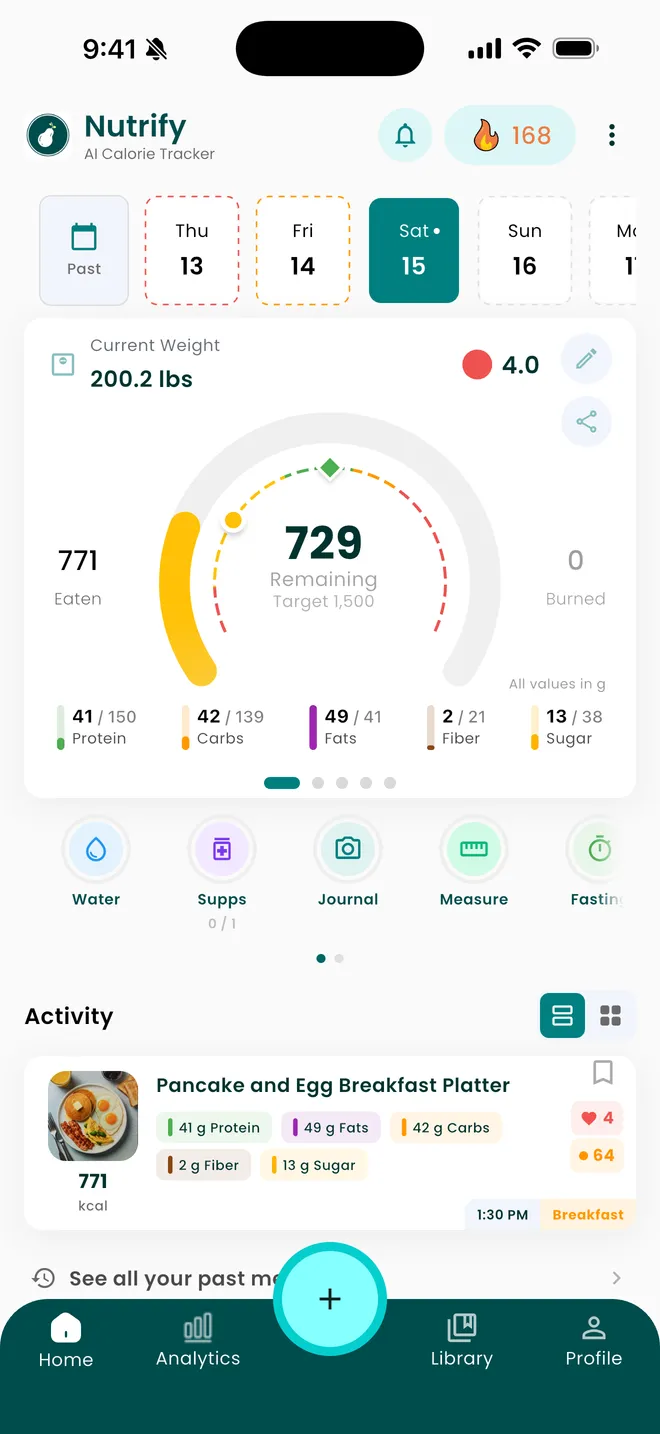
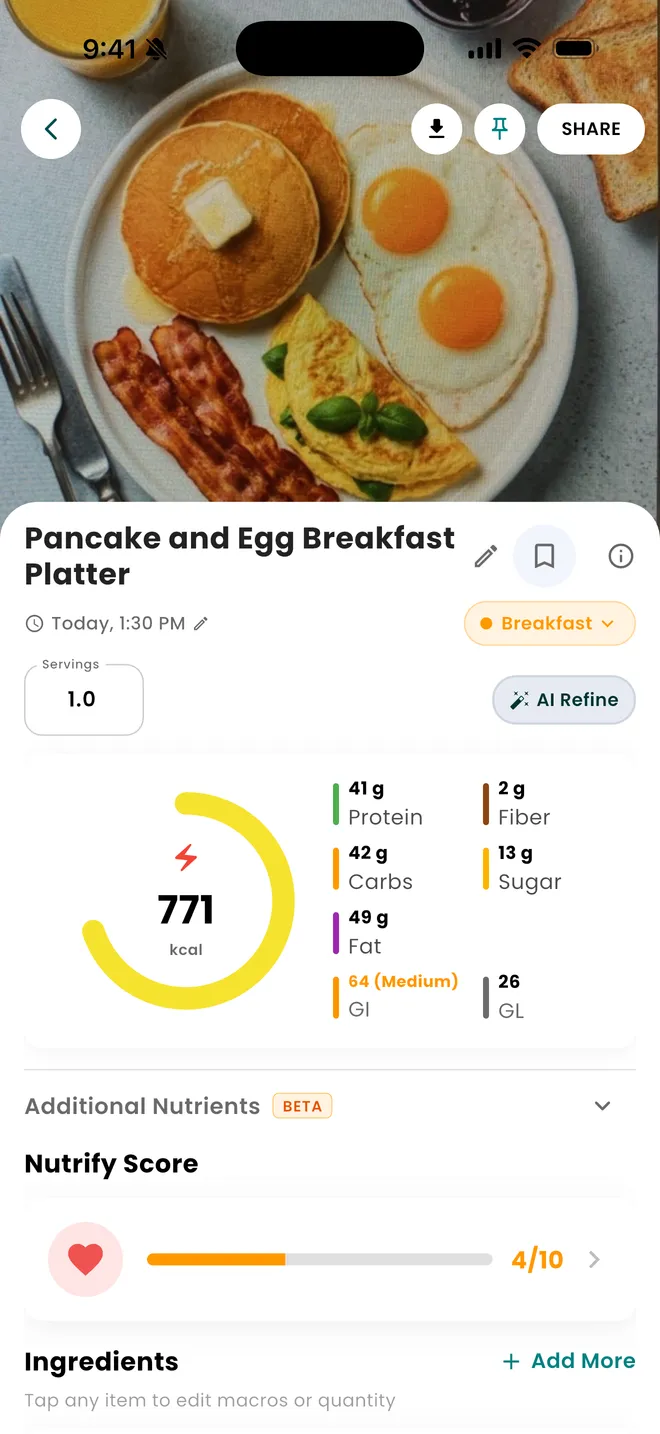
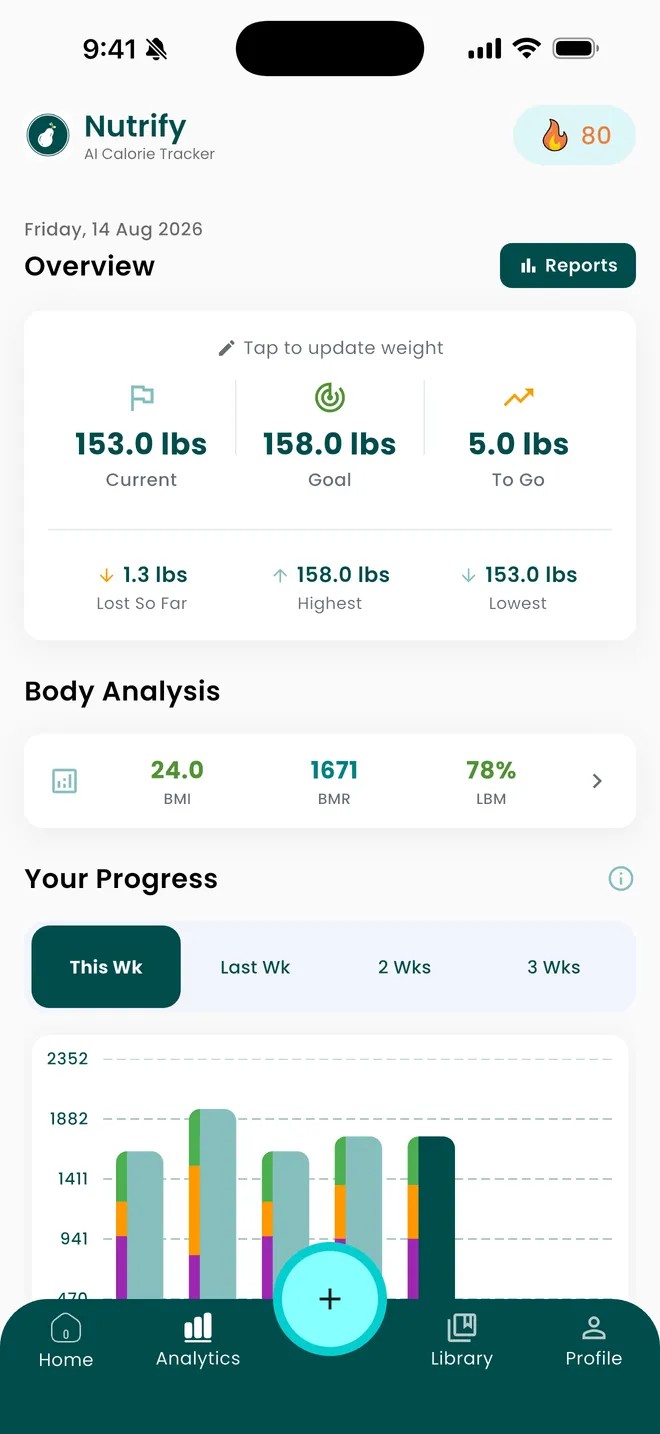
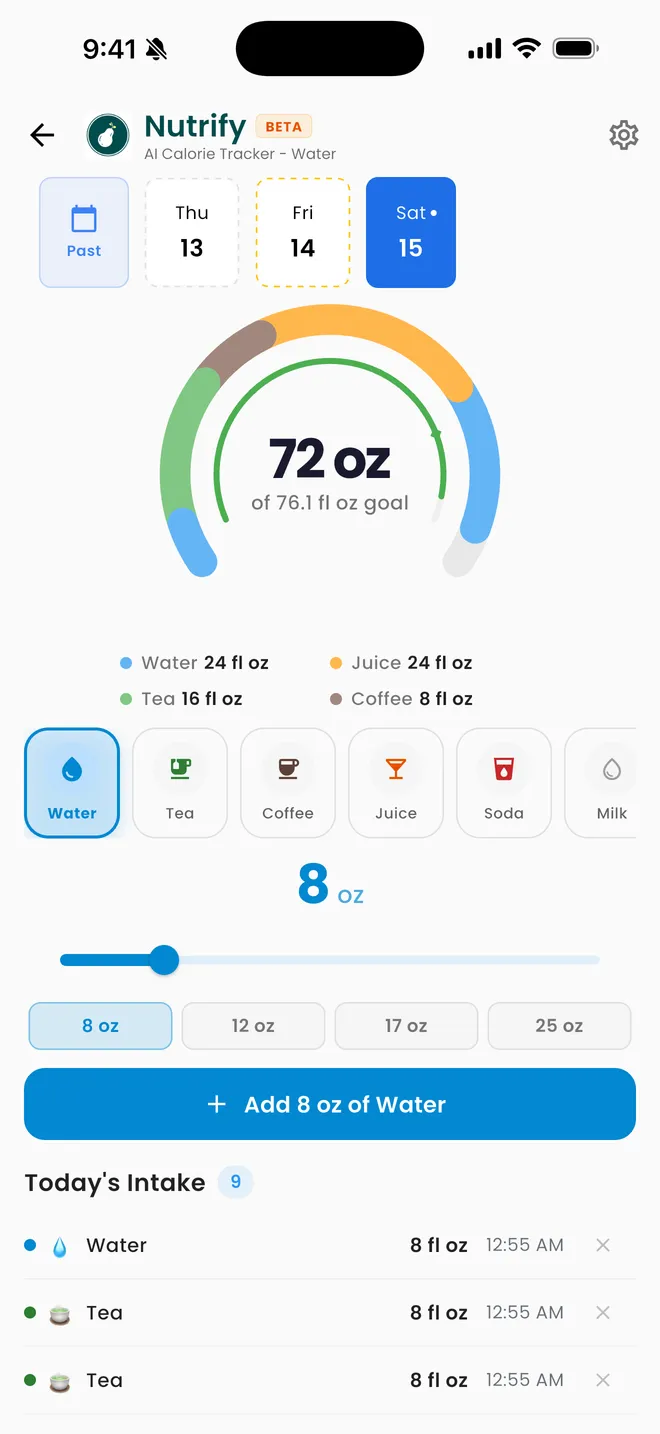
Food, supplements, fasting, and progress in one app


Learn More About RMR
Understanding Resting Metabolic Rate (RMR)
Think of your Resting Metabolic Rate (RMR) as your body's "idle speed" - it's the minimum amount of energy (calories) your body burns just to keep you alive and functioning. We're talking about the calories needed for your heart to beat, your lungs to breathe, your brain to think, your kidneys to filter, your liver to process, and your cells to regenerate. Even when you're just chilling on the couch binge-watching Netflix, your body is working 24/7 behind the scenes!
Here's what's wild: your RMR accounts for 60-75% of your total daily calorie burn for most people. That means if you burn 2,000 calories in a day, roughly 1,200-1,500 of those calories are just keeping your body alive, before you even factor in walking to the kitchen, hitting the gym, or digesting your meals. Understanding your RMR is absolutely crucial for managing your weight - it's the foundation on which all your calorie and nutrition planning is built.
Whether you want to lose fat, build muscle, or just maintain your current weight, knowing your RMR helps you set realistic calorie targets. Eat way below your RMR? Your metabolism will slow down and you'll feel terrible. Eat way above your TDEE (RMR + activity)? You'll gain weight. Get it just right? That's when the magic happens!
RMR vs BMR vs TDEE: What's the difference?
People often confuse these three terms. Here's the breakdown:
| Metric | What It Measures | Conditions | Typical Value |
|---|---|---|---|
| BMR (Basal Metabolic Rate) | Absolute minimum calories to stay alive | Lab setting, 12hr fast, 8hr sleep, dark room, no movement | 1,400-1,800 cal (women) 1,600-2,200 cal (men) |
| RMR (Resting Metabolic Rate) | Calories burned at rest (normal conditions) | Sitting quietly, relaxed, no fasting required | 10-15% higher than BMR (more practical) |
| TDEE (Total Daily Energy Expenditure) | Total calories burned in a full day | RMR + exercise + daily activity + digestion | 1,800-2,800 cal (women) 2,200-3,500 cal (men) |
Pro tip: For weight loss, eat below your TDEE but above your RMR. For muscle gain, eat above your TDEE. Never eat below your RMR!
Average RMR by age and gender
RMR varies significantly based on age and gender. Here's what you can typically expect:
Women's Average RMR
| Age Range | Average RMR |
|---|---|
| 18-25 years | 1,400-1,600 cal |
| 26-35 years | 1,350-1,550 cal |
| 36-45 years | 1,300-1,500 cal |
| 46-55 years | 1,250-1,450 cal |
| 56-65 years | 1,200-1,400 cal |
| 65+ years | 1,100-1,350 cal |
Men's Average RMR
| Age Range | Average RMR |
|---|---|
| 18-25 years | 1,800-2,100 cal |
| 26-35 years | 1,750-2,050 cal |
| 36-45 years | 1,700-2,000 cal |
| 46-55 years | 1,650-1,950 cal |
| 56-65 years | 1,600-1,900 cal |
| 65+ years | 1,500-1,850 cal |
Note: These are averages for people of normal weight and muscle mass. Your actual RMR can be 10-20% higher or lower based on body composition, genetics, and health conditions.
How We Calculate RMR
Our calculator uses the Harris-Benedict equation to estimate your Resting Metabolic Rate (RMR). This equation is widely used and considered reliable for most individuals. Here's how it works:
For men: RMR = 66.5 + (13.75 × weight in kg) + (5.003 × height in cm) - (6.755 × age in years)
For women: RMR = 655.1 + (9.563 × weight in kg) + (1.850 × height in cm) - (4.676 × age in years)
Let's look at two example calculations to better understand how this works:
Example 1: Adult Male
- Age: 39 years
- Height: 183 cm
- Weight: 95 kg
- Gender: Male
RMR = 66.5 + (13.75 × 95) + (5.003 × 183) - (6.755 × 39)
= 66.5 + 1306.25 + 915.549 - 263.445
= 2024.854 kcal/day
≈ 2025 kcal/day (rounded)
Example 2: Adult Female
- Age: 28 years
- Height: 165 cm
- Weight: 60 kg
- Gender: Female
RMR = 655.1 + (9.563 × 60) + (1.850 × 165) - (4.676 × 28)
= 655.1 + 573.78 + 305.25 - 130.928
= 1403.202 kcal/day
≈ 1403 kcal/day (rounded)
After calculating the base RMR, we then estimate daily calorie needs for different activity levels by multiplying the RMR by an activity factor:
- Sedentary (little to no exercise): RMR × 1.2
- Lightly active (light exercise 1-3 days/week): RMR × 1.375
- Moderately active (moderate exercise 3-5 days/week): RMR × 1.55
- Very active (hard exercise 6-7 days/week): RMR × 1.725
- Extra active (very hard exercise & physical job or 2x training): RMR × 1.9
Factors Affecting RMR
Several factors can influence your RMR:
- Age: RMR typically decreases with age
- Gender: Men generally have a higher RMR than women
- Body composition: More muscle mass increases RMR
- Genetics: Some people naturally have a higher or lower RMR
- Hormones: Thyroid hormones, for example, can affect RMR
- Diet: Severe calorie restriction can lower RMR
- Environmental temperature: Extreme cold or heat can increase RMR
- Fasting/Dieting: RMR can decrease if a person is dieting or fasting because the body conserves energy during these periods
How to Increase Your RMR
While your RMR is influenced by factors you can't control (like age and genetics), there are ways to potentially increase it:
- Increase muscle mass: Engage in resistance or strength training exercises
- Eat regular meals: Eating regularly can prevent metabolic slowdowns
- Stay hydrated: Drinking water can temporarily boost metabolism
- High-Intensity Interval Training (HIIT): This type of exercise can boost metabolism
Remember, consistency is key in muscle building, and it's important to allow your muscles time to rest and recover between workouts.
Using Your RMR Results
Once you know your RMR, you can use it to:
- Set realistic weight loss or gain goals
- Create an effective meal plan
- Understand how many calories you need for different activity levels
- Make informed decisions about your diet and exercise routine
Remember, RMR is just one part of the equation. To maintain weight, you need to consume the same number of calories as you burn through RMR, physical activity, and the thermic effect of food. To lose weight, you need to create a calorie deficit, and to gain weight, a calorie surplus.
How to Use This Calculator
- Enter your age in years
- Select your gender
- Enter your height (you can choose between cm, feet, or inches)
- Enter your weight (you can choose between kg or lbs)
- Click the Calculate RMR button
- Review your results, including your RMR and daily calorie needs for different activity levels
Remember, while this calculator provides a good estimate, individual RMR can vary. For the most accurate measurement, consider professional testing methods like indirect calorimetry.
Common mistakes when using RMR
Avoid these pitfalls that sabotage your results:
❌ Confusing RMR with total calorie needs
Your RMR is NOT what you should eat! It's just one component of your TDEE. If your RMR is 1,500 and you're moderately active, your TDEE might be 2,325 calories. Eating only your RMR will crash your metabolism and leave you exhausted. Use our TDEE calculator to find your true calorie needs.
❌ Assuming RMR never changes
Your RMR isn't static! It changes as you gain or lose weight, age, build muscle, or go through hormonal changes. Recalculate your RMR every 10-15 pounds of weight change or every 6 months.
❌ Eating below RMR for extended periods
This is metabolic suicide! Eating significantly below your RMR for weeks or months will cause metabolic adaptation, muscle loss, hormonal disruption, and eventually stall your weight loss completely. Always eat above your RMR.
❌ Ignoring the impact of muscle mass
Standard RMR calculators assume average body composition. If you're very muscular or very overweight, your actual RMR might be 10-20% different than calculated. Track your results and adjust accordingly.
❌ Not accounting for metabolic adaptation
After dieting for several months, your RMR can decrease by 10-20% beyond what's expected from weight loss. This is why weight loss plateaus happen. Take diet breaks at maintenance calories to restore your metabolism.
When to See a Doctor
While this calculator provides useful estimates, consult a healthcare provider if:
- You suspect an abnormally slow or fast metabolic rate despite normal eating patterns
- You have a diagnosed or suspected thyroid condition
- You want clinical-grade metabolic testing such as indirect calorimetry
FAQ
Domande Frequenti
Trova le risposte alle domande più comuni
Here's the deal: RMR (Resting Metabolic Rate) and BMR (Basal Metabolic Rate) are basically cousins - super similar but with one key difference. BMR is measured in a lab under super strict conditions: you need to fast for 12 hours, sleep for 8 hours, and be tested first thing in the morning in a dark, temperature-controlled room. It's your absolute bare minimum energy needs. RMR is measured under more "normal" resting conditions - you don't need to fast or sleep in a lab. Because RMR includes some basic daily activities like sitting up and slight movements, it's typically 10-15% higher than BMR. For practical purposes, most people (and calculators like ours) use RMR since it's way more realistic and easier to measure.
Yes! While you can't change factors like your age or genetics, you can definitely boost your RMR with the right strategies. The number one way is building muscle through strength training - muscle tissue burns way more calories at rest than fat tissue (about 6 calories per pound of muscle vs 2 calories per pound of fat daily). Other proven methods include: eating enough protein (high thermic effect), staying hydrated (mild dehydration can slow metabolism by 2-3%), getting quality sleep (poor sleep tanks your metabolism), doing HIIT workouts (creates an "afterburn" effect), and avoiding extreme calorie restriction (which can lower your RMR by 20-30%). Even just standing more during the day instead of sitting can add up!
Our calculator uses the Harris-Benedict equation, which is considered one of the gold standards for RMR estimation. For most people, it's accurate within 10-15% of actual RMR. However, it's still just an estimate based on population averages. The equation might be less accurate if you're very muscular (it will underestimate), very lean (might overestimate), elderly, have thyroid issues, or have been dieting for a long time. For the most accurate measurement, you'd need indirect calorimetry (breathing test) or metabolic cart testing at a sports lab or university, which typically costs $100-200. For everyday purposes though, our calculator gives you a solid starting point that's good enough for planning your diet and exercise.
Think of RMR as the foundation of your daily calorie burn - it's just what your body needs to stay alive (breathing, circulation, brain function, etc.). TDEE (Total Daily Energy Expenditure) is RMR PLUS everything else: exercise, walking around, fidgeting, digesting food, even chewing gum! TDEE is your complete calorie burn for the day. For most people, RMR makes up about 60-75% of TDEE, activity and exercise account for 15-30%, and digesting food (TEF) is about 10%. For example, if your RMR is 1,500 calories and you're moderately active, your TDEE might be 2,325 calories (RMR × 1.55). Check out our TDEE calculator to get your complete daily calorie needs.
This is one of those unfair facts of aging! RMR naturally declines by about 2-3% per decade after age 30, which works out to roughly 100-150 fewer calories burned per day every 10 years. The main culprits: 1) Muscle loss (sarcopenia) - we naturally lose 3-8% of muscle mass per decade after 30 if we don't actively fight it, 2) Hormonal changes - thyroid function, growth hormone, and testosterone all decline with age, 3) Reduced cellular activity - your cells literally become less metabolically active, 4) Lower activity levels - older adults tend to move less throughout the day. The good news? You can fight back! Regular strength training can maintain or even build muscle mass at any age, potentially offsetting much of this metabolic decline.
Nope, this is a persistent myth that just won't die! Eating 6 small meals vs 3 larger meals doesn't significantly affect your RMR or total calorie burn. What matters is your TOTAL calories and macros over 24 hours, not how you break them up. The "thermic effect of food" (calories burned digesting) is roughly 10% of calories consumed, whether you eat it all at once or spread out. Some people find frequent small meals help control hunger, others prefer fewer larger meals - do whatever helps you stick to your calorie target. That said, skipping meals entirely or extreme intermittent fasting CAN temporarily lower RMR (by 5-10%) if done too aggressively for too long.
The short answer: probably not permanently, but they can definitely mess it up for months or even years. When you do a severe crash diet (like eating 800-1,000 calories when you need 2,000), your body adapts to conserve energy - this is called "metabolic adaptation" or "adaptive thermogenesis." Your RMR can drop 20-30% beyond what's expected from weight loss alone. Your body also reduces NEAT (fidgeting, spontaneous movement), increases hunger hormones (ghrelin), and decreases fullness hormones (leptin). The good news? With proper reverse dieting (slowly increasing calories), resistance training, and patience, most people can restore their RMR to normal levels within 6-12 months. This is why slow, moderate weight loss (1-2 lbs per week) is always better than crash diets.
Let's get real with the numbers: muscle tissue burns about 6 calories per pound per day at rest, while fat burns about 2 calories per pound per day. So if you gain 10 pounds of muscle (which takes 6-12 months of serious training), you'll increase your RMR by about 40-60 calories per day. That's not huge, but it adds up to 14,600-21,900 calories per year (4-6 pounds of fat!). Plus, muscle mass has indirect benefits: you burn more calories during workouts, have higher NEAT (you move more naturally), better insulin sensitivity, and improved body composition. The real magic isn't just the RMR boost - it's the complete package of having more muscle.
NO! This is a terrible idea that backfires almost every time. Your RMR is the MINIMUM your body needs to function - eating below it is like trying to run your car on fumes. When you eat way below RMR (like 1,200 calories when your RMR is 1,500), several bad things happen: extreme hunger and cravings, muscle loss (your body breaks down muscle for energy), nutrient deficiencies, hormonal disruption (thyroid, sex hormones, cortisol), metabolic adaptation (your RMR drops even further), poor workout performance, terrible mood and brain fog, and eventual binge eating. Instead, eat above your RMR but below your TDEE. A good target is RMR + 200-500 calories, which creates a moderate deficit without destroying your metabolism.
Sleep is way more important for your metabolism than most people realize! Poor sleep (less than 7 hours or low quality) can decrease your RMR by 5-20% through multiple mechanisms: disrupted thyroid function (T3 and T4 hormones drop), elevated cortisol (stress hormone that promotes fat storage), insulin resistance (your cells don't respond to insulin properly), reduced leptin and increased ghrelin (hunger hormones go haywire), and decreased NEAT (you're too tired to move much). Multiple studies show that people who sleep 5-6 hours burn 100-300 fewer calories per day compared to those getting 7-9 hours. Plus, sleep deprivation increases cravings for high-calorie junk food by 25-30%. Bottom line: prioritize 7-9 hours of quality sleep if you want your metabolism functioning optimally!
Related Calculators
Get a complete picture of your metabolic health and calorie needs with these related calculators:
BMR Calculator
Calculate your Basal Metabolic Rate - the laboratory-measured minimum calories your body needs at complete rest.
TDEE Calculator
Calculate your Total Daily Energy Expenditure - your complete daily calorie burn including activity.
Calorie Deficit Calculator
Plan your weight loss by calculating the right calorie deficit based on your RMR and activity level.
Macro Calculator
Break down your calorie target into optimal protein, carbs, and fats based on your RMR and goals.
Protein Calculator
Calculate your optimal protein intake to maintain muscle mass and boost your RMR.
Body Fat Calculator
Estimate your body fat percentage - muscle mass significantly affects your RMR.
Weight Gain Calculator
Plan healthy weight gain and muscle building with a calorie surplus above your RMR.
BMI Calculator
Check your Body Mass Index to see if your current weight is affecting your metabolic health.
Trasforma le Tue Abitudini con Nutrify
La tua soluzione completa basata sull'IA per monitorare calorie, pasti e ricette. Un te più sano e felice.
- •Monitoraggio calorie senza sforzo con riconoscimento alimentare IA
- •Piani pasto e ricette personalizzati
- •Monitoraggio progressi e approfondimenti
More than a calorie counter
Food, supplements, fasting, and progress in one app
Research References
Parameter Details
- Age: Your current age in years.
- Gender: Biological sex, affects RMR calculations.
- Height: Your height (54.6 cm - 272 cm).
- Weight: Your current weight (20 kg - 635 kg).
Related Calculators
- Calorie Deficit Calculator - Plan Your Weight Loss
- BMR Calculator - Calculate Your Basal Metabolic Rate
- TDEE Calculator - Calculate Your Total Daily Energy Expenditure
- Macro Calculator - Calculate Your Daily Protein, Carbs & Fats
Segui Nutrify su Google
Aggiungi Nutrify tra le fonti preferite per vedere più guide sulla nutrizione nei tuoi risultati Google.