
Peptide Reconstitution Calculator
You know what is in the vial and what you intend to draw. This works out the bacteriostatic water, which is the number every other calculator asks you for.
用Nutrify重塑健康習慣
一站式AI營養管理,追蹤卡路里、記錄飲食、管理食譜。遇見更健康的自己。
- •AI智慧辨識食物,輕鬆追蹤卡路里
- •個人化飲食計畫與食譜推薦
- •進度追蹤與健康洞察


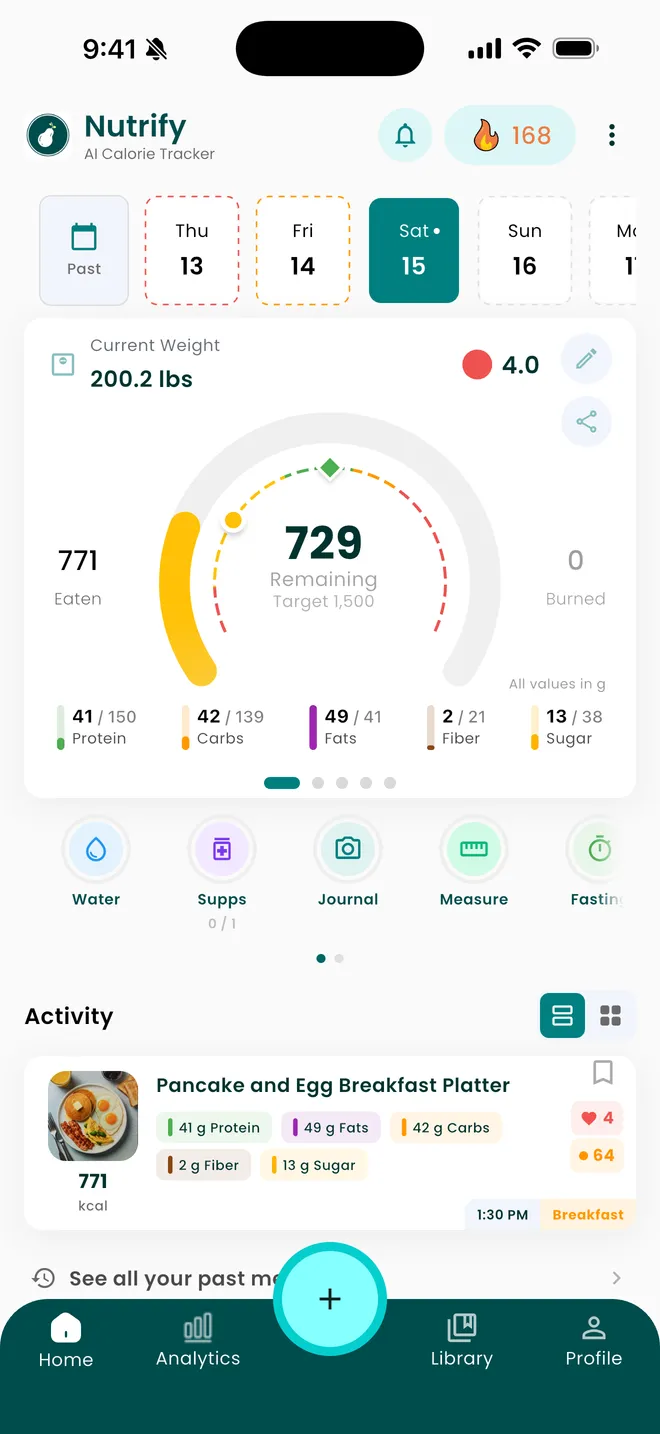
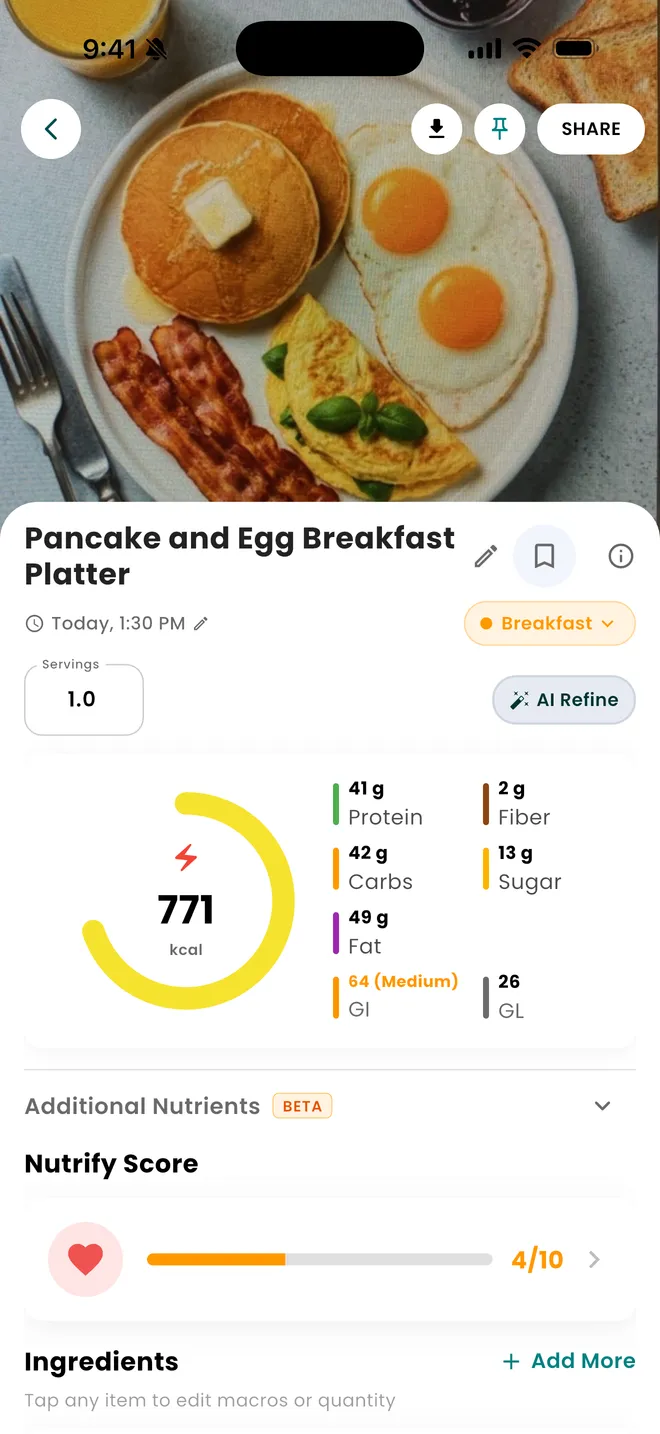
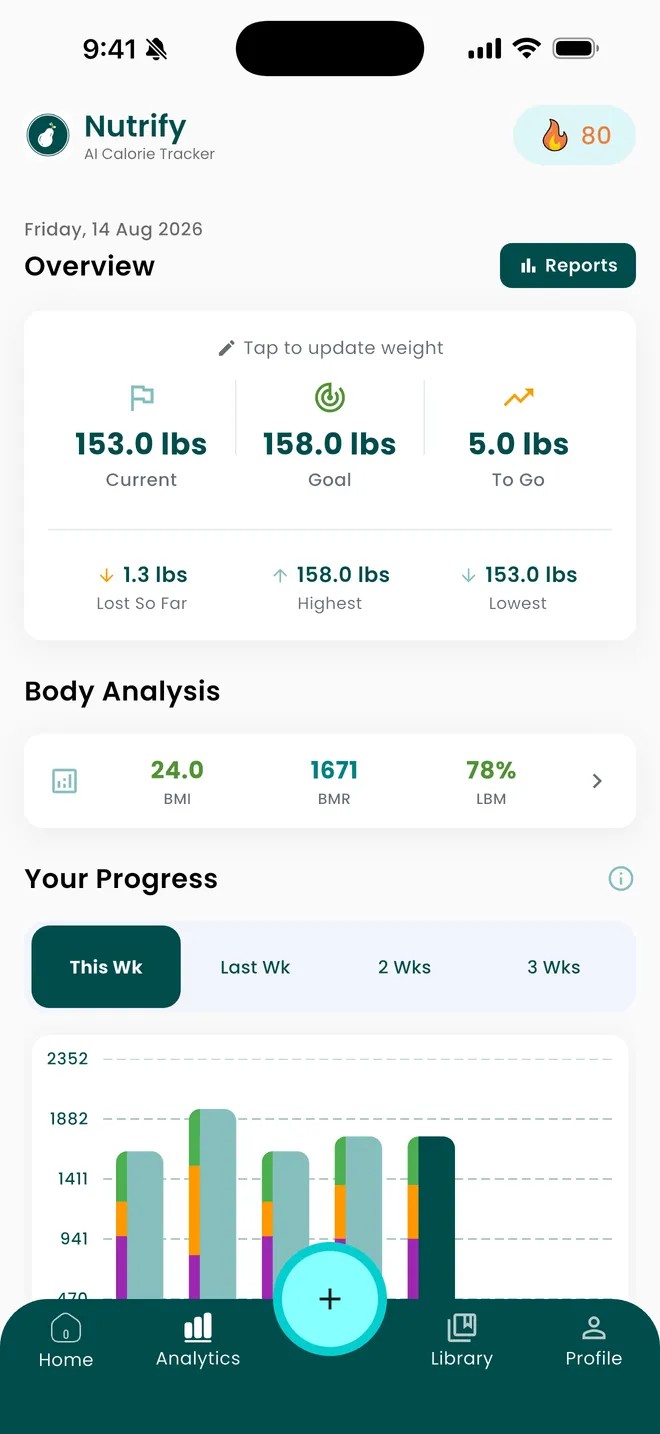
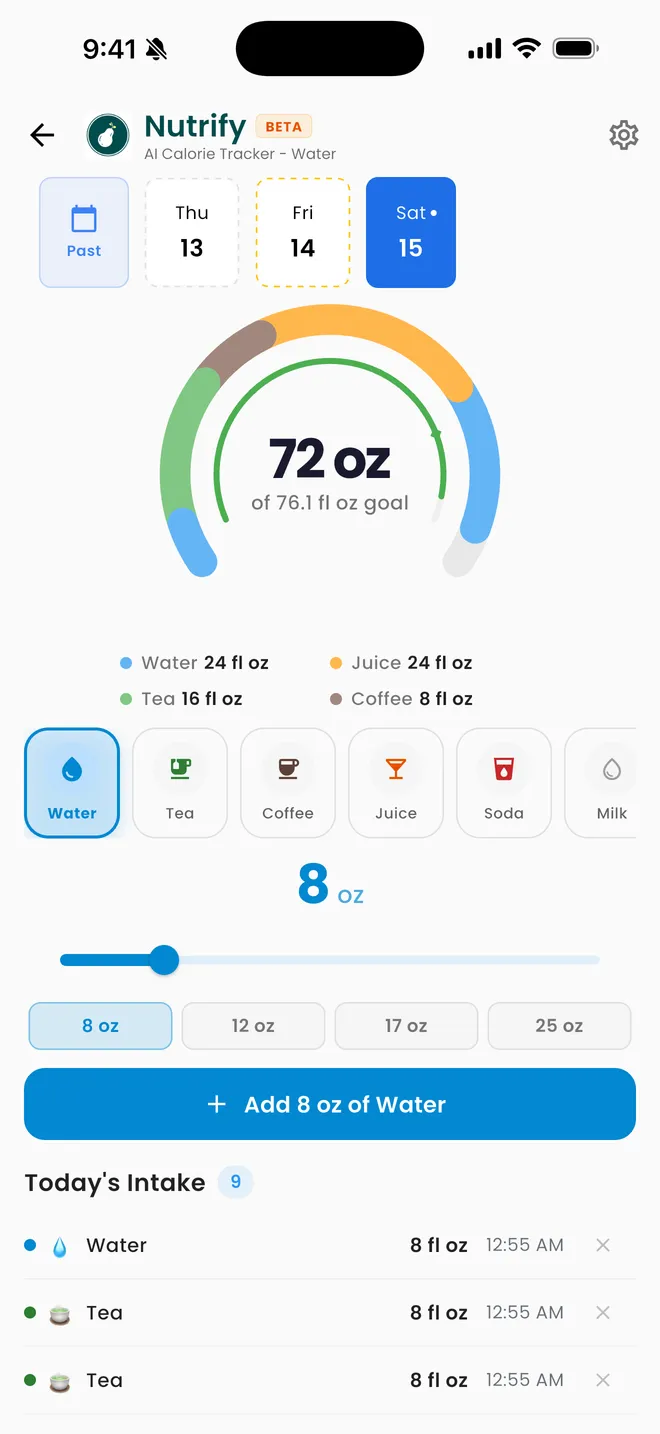
More than a calorie counter
Food, supplements, fasting, and progress in one app


Learn More About Peptide Reconstitution
What Does a Peptide Reconstitution Calculator Do?
A lyophilised vial arrives as dry powder. Before anything can be drawn from it, a liquid has to be added, and the moment that happens the vial acquires a property that is not printed anywhere on it: a concentration. Every dose you take afterwards depends on that number, and the only place it exists is in your own record of how much water you added.
This calculator works the arithmetic in both directions. In the default mode it answers the question people actually arrive with, which is how much bacteriostatic water to add in the first place. In the second mode it answers the question that comes later, which is what a given dose is worth in syringe units on a vial you already mixed.
The Two-Vial Example That Explains Everything
Put two vials side by side. Both contain 10 mg of the same powder. Both are about to be drawn with the same U-100 insulin syringe. The only difference is the volume of water each one received.
| Vial A | Vial B | |
|---|---|---|
| Vial contents | 10 mg | 10 mg |
| Water added | 1 mL | 2 mL |
| Concentration | 10 mg/mL | 5 mg/mL |
| Per syringe unit | 100 mcg | 50 mcg |
| Draw to 5 units | 500 mcg | 250 mcg |
Same vial size. Same syringe. Same five units on the plunger. Twice the amount delivered from one of them. Nothing about the two syringes would look different if you photographed them, and nothing on either vial would tell you which was which a week later.
This is why a number of units, quoted without the concentration it came from, is not a dose. It is a distance along a barrel. The habit worth building is to record the mixing volume and the resulting concentration at the moment you mix, and to write both on the vial.
How the Arithmetic Works
There are only three relationships involved, and every calculator in this category is a rearrangement of them.
concentration (mg/mL) = vial contents (mg) / water added (mL)
draw volume (mL) = your dose (mg) / concentration (mg/mL)
syringe units = draw volume (mL) x 100
The last line holds because a U-100 syringe is graduated at 100 units per mL, so one unit is 0.01 mL. That graduation is a property of the syringe, defined by the insulin syringe standard, and it does not change with what is in the barrel.
Running it backwards
Rearranging those same three lines to solve for the water gives the reverse mode:
water (mL) = target units / 100 x vial contents (mg) / your dose (mg)
Worked through: a 10 mg vial, a 1 mg dose, and a wish to draw to 20 units gives 20 / 100 x 10 / 1, which is 2 mL. Check it forwards and the concentration is 5 mg/mL, the draw volume is 0.2 mL, and the draw is 20 units. The two directions agree, which is the whole test of whether a reconstitution calculator is trustworthy.
Why the Draw Size Is a Safety Feature
Choosing a water volume is really choosing a draw size, and draw size decides how much your hand and your eyesight can cost you.
- Under about 10 units. One tick mark is 0.01 mL. On a 5 unit draw that single tick is a fifth of everything you are injecting. Small draws punish small mistakes.
- Between 10 and 35 units. The band the calculator shades on the syringe. A tick is a manageable share of the total and the meniscus sits somewhere you can actually see.
- Above 35 units. Easy to read, but each dose is taking a lot of vial volume, and on a 0.3 mL or 0.5 mL barrel the draw may not fit at all. The liquid can run out before the peptide does.
The calculator never blocks you for being outside the band. It explains what being outside it costs, and leaves the decision where it belongs.
Reading a U-100 Syringe Without Guessing
Three different quantities get called by names that sound alike, and confusing them is the most common source of trouble.
- Units are volume. On a U-100 barrel, one unit is 0.01 mL.
- Lines are tick marks, and a tick is not always one unit. A 1.0 mL barrel is frequently printed with a mark every 2 units, so drawing to the second line is 4 units and not 2.
- IU is a measure of biological activity used for some hormones. It shares the word unit with the marks on the barrel and has no relationship to them. This calculator does not convert IU, because there is no general conversion to make.
The diagram above renders the barrel you selected at its own scale rather than a generic picture, so a 12 unit draw on a 0.3 mL barrel looks as different from the same draw on a 1.0 mL barrel as it does in your hand.
The Error Class Worth Knowing About
Case reports collected by poison control centres describe patients who self-administered ten times their intended amount from self-prepared vials. One report noted a patient dosing in millilitres and units rather than in milligrams, and observed that vials do not carry the safety features a pre-filled pen has, which is what allows a large overdose to be drawn at all. The published record is cited in the sources at the top of this page.
Two habits remove most of that risk, and neither requires an app.
- Say the dose in mass. Milligrams or micrograms, never units. Units are how you measure it out, not what it is.
- Write the concentration on the vial the moment you mix it, along with the date. A mixed vial with no concentration on it is a vial whose doses cannot be reconstructed.
The calculator watches for the arithmetic signature of a unit mix-up. If the dose you enter is more than a hundred times larger or smaller than the vial contents, it stops and asks you to re-read both fields. If the dose is larger than the entire vial, it refuses to return a water volume at all, because no volume of water can make one draw bigger than everything in the vial.
What This Calculator Deliberately Does Not Do
- It does not suggest a dose, for any compound, ever.
- It does not carry a compound list, a preset protocol or a typical range.
- It does not tell you whether a dose you entered is appropriate.
- It does not convert IU, because no general conversion exists.
- It does not store anything you type. The arithmetic runs in your browser.
The preset chips on the form are container sizes: vial sizes in mg and water volumes in mL. Those are properties of glassware, not of a treatment, and every one of them can be replaced by typing whatever your own vial says. You are never forced into a predetermined volume.
This follows the same rule as the rest of the site, set out in our editorial policy: calculators name the arithmetic they use and the sources it comes from, the result is deterministic, and nothing on the page reads as instruction for treating a health condition. Nutrify does not provide medical advice.
A Worked Example From Start to Finish
Suppose the vial says 5 mg, and the dose you have been told to draw is 250 mcg.
- Enter 5 mg as the vial contents and 250 mcg as the dose. The calculator converts internally, so 250 mcg becomes 0.25 mg.
- Choose a target draw size. Say 20 units, comfortably inside the readable band.
- The water comes out as 20 / 100 x 5 / 0.25, which is 4 mL. That is the hero number: add 4 mL of bacteriostatic water.
- The concentration is 5 mg divided by 4 mL, which is 1.25 mg/mL, or 12.5 mcg per unit.
- Your draw is 0.25 divided by 1.25, which is 0.2 mL, so you draw to 20 units.
- The vial holds 5 divided by 0.25, which is 20 doses. Note that this is true regardless of the water volume you chose.
Now write 1.25 mg/mL, 12.5 mcg per unit and the date on the vial, and the number 20 will still mean something to you a month from now.
Track What You Measure With Nutrify
A calculator answers one question once. Keeping a record is what stops the question coming back. Nutrify is a nutrition and health tracker that keeps your history on a synced account rather than only on the device in your hand, so a phone change does not take your log with it.
- Food and macro tracking with AI photo scanning
- Weight and body measurement trends over time
- Hydration and supplement schedules with reminders
- Apple Health and Health Connect sync
- Server-backed sync, so your history survives a new phone
The Bottom Line
- A syringe unit is 0.01 mL of liquid. It is a volume, and it becomes a dose only when you know the concentration.
- The water volume you add sets the concentration, and therefore how many units a given dose lands on.
- It does not change how many doses a vial holds. That is vial contents divided by dose, always.
- Landing the draw between 10 and 35 units makes the measurement forgiving. Outside that band, small errors get expensive.
- Record the concentration on the vial. It is the number people regret not writing down.
- Say doses in mass, never in units. Ten-fold errors live in the gap between those two habits.
- This tool does arithmetic on your numbers. Dose decisions belong with a qualified healthcare professional.
FAQ
常見問題
尋找常見問題的解答
There is no single right answer, because the water volume does not change how much peptide is in the vial. What it changes is how far you pull the plunger for a given dose. Adding less water gives a stronger solution and a smaller draw. Adding more water gives a weaker solution and a bigger draw. The practical way to choose is to work backwards from the draw size you want to read on the barrel, which is what the calculator above does. Enter the vial contents, the dose you intend to draw, and the number of units you would like that dose to land on, and it returns the water volume that produces exactly that.
Because they are built around the forward equation, which starts from a mixed vial. That is useful once you have already mixed, but it is the wrong starting point for someone holding an unopened vial of powder. The water volume is the one number a first-time user does not have and cannot guess, and being asked for it is a common complaint about calculators in this category. The reverse mode here treats the water as the unknown and solves for it. The forward mode is still available on the second tab for vials you have already prepared.
Volume, not peptide. A U-100 insulin syringe is graduated so that 100 units equal 1 mL, which makes one unit 0.01 mL. That definition comes from the insulin standard the syringe is built to, and it says nothing about what is dissolved in the liquid. A unit only becomes a dose once you know the concentration of the vial you are drawing from. This is why a number like ten units, quoted on its own, carries no information about how much compound it delivers.
First work out the concentration by dividing the vial contents in mg by the water you added in mL. That gives mg per mL. Divide by 100 to get mg per unit, or multiply by 10 to get mcg per unit. Then multiply by the number of units you draw. For example, a 10 mg vial in 2 mL is 5 mg/mL, which is 50 mcg per unit, so a 20 unit draw is 1000 mcg, or 1 mg. Reverse the steps to go from a dose to a number of units, which is what the second tab of the calculator does for you.
Bacteriostatic water contains a small amount of benzyl alcohol as a preservative, which is what allows a vial to be entered more than once and stored between doses. Sterile water and saline contain no preservative and are intended for single use. The distinction matters for multi-dose vials, which is what most reconstituted vials are. Whichever liquid is used, the arithmetic in this calculator is identical, because the calculator is working with volume rather than with the chemistry of the diluent. Talk to a qualified healthcare professional about which diluent is appropriate for what you are doing.
It does not need to be, but it is the range in which a human being can read a barrel reliably. Below about 10 units a single tick mark is a large share of the whole draw, so a small slip becomes a large percentage error. Above about 35 units you are using a lot of vial volume for each dose, which means the liquid can run out before the peptide does, and on a small barrel the draw may not fit at all. The calculator shades that band on the syringe diagram and tells you when your draw falls outside it, without preventing you from proceeding.
The calculator says so rather than quietly rounding the number down to the end of the barrel, because a silently clamped result is how a person ends up drawing less than they intended without knowing it. When the draw exceeds the barrel you get three options: move to a larger barrel, add more water so the same dose lands at fewer units, or split the draw across more than one injection if your own plan allows for that. Which of those is right is a decision for you and a qualified professional, not for a calculator.
No, and this surprises most people. The number of doses is the vial contents divided by the dose, and water has nothing to do with it. A 10 mg vial gives twenty 0.5 mg doses whether you mix it in 1 mL or in 3 mL. What the water changes is the volume of each of those twenty draws, and therefore the number of units you pull to. If you are trying to make a vial last a certain number of doses, the lever is the dose size, not the diluent.
Pick the one you actually own, because the diagram is drawn to that barrel scale on purpose. The three common U-100 sizes are 0.3 mL with 30 units, 0.5 mL with 50 units and 1.0 mL with 100 units, and they are all graduated at 1 unit per 0.01 mL. A 12 unit draw occupies nearly half of a 30 unit barrel and only a slim band of a 100 unit barrel, so the same dose is far easier to read accurately on the smaller barrel. Larger barrels are also frequently printed with a mark every 2 units rather than every 1, which is where the phrase two lines becomes ambiguous.
It is an injection of ten times the intended amount, and it is the error class most often described in the published reports on self-prepared vials. Two mechanisms cause almost all of them. The first is confusing mg with mcg, which is a factor of 1000 hiding behind two similar looking labels. The second is treating a number of units as though it were a dose, without the concentration that gives it meaning. The calculator flags a dose that is more than 100 times larger or smaller than the vial contents, and refuses to compute when the dose entered exceeds the entire vial, because both patterns almost always mean a unit selector is set wrong.
Yes. The concentration is the single most useful thing to record and the thing people most often skip. Once a vial is mixed there is nothing on the outside of it that tells you what a unit delivers, so a vial with no concentration written on it is a vial whose doses cannot be reconstructed later. Writing the mg per mL, the mcg per unit and the date it was mixed on the label takes a few seconds and removes the whole class of errors that comes from remembering the wrong mixing volume weeks afterwards.
No, and it never will. It does not contain a compound list, a suggested dose, a typical range or a schedule for anything. You supply the vial contents and you supply the dose, and the tool does volume and concentration arithmetic on your own numbers. That is a deliberate editorial position as well as a product one: Nutrify does not provide medical advice, and nothing on this page should be read as instruction for treating a health condition. Dose decisions belong with a qualified healthcare professional who knows your history.
Related Calculators
Other free Nutrify tools that run deterministic arithmetic on numbers you supply:
Water Intake Calculator
Work out your daily hydration target from body weight, climate and training load.
TDEE Calculator
Estimate total daily energy expenditure from your height, weight, age and activity level.
Macro Calculator
Split a calorie target into protein, carbohydrate and fat in grams per day.
Protein Calculator
Find a daily protein target in grams from your body weight and training goal.
用Nutrify重塑健康習慣
一站式AI營養管理,追蹤卡路里、記錄飲食、管理食譜。遇見更健康的自己。
- •AI智慧辨識食物,輕鬆追蹤卡路里
- •個人化飲食計畫與食譜推薦
- •進度追蹤與健康洞察
More than a calorie counter
Food, supplements, fasting, and progress in one app
在 Google 上追蹤 Nutrify
將 Nutrify 加入偏好來源,在 Google 搜尋結果中看到更多我們的營養指南。