
BMI Calculator
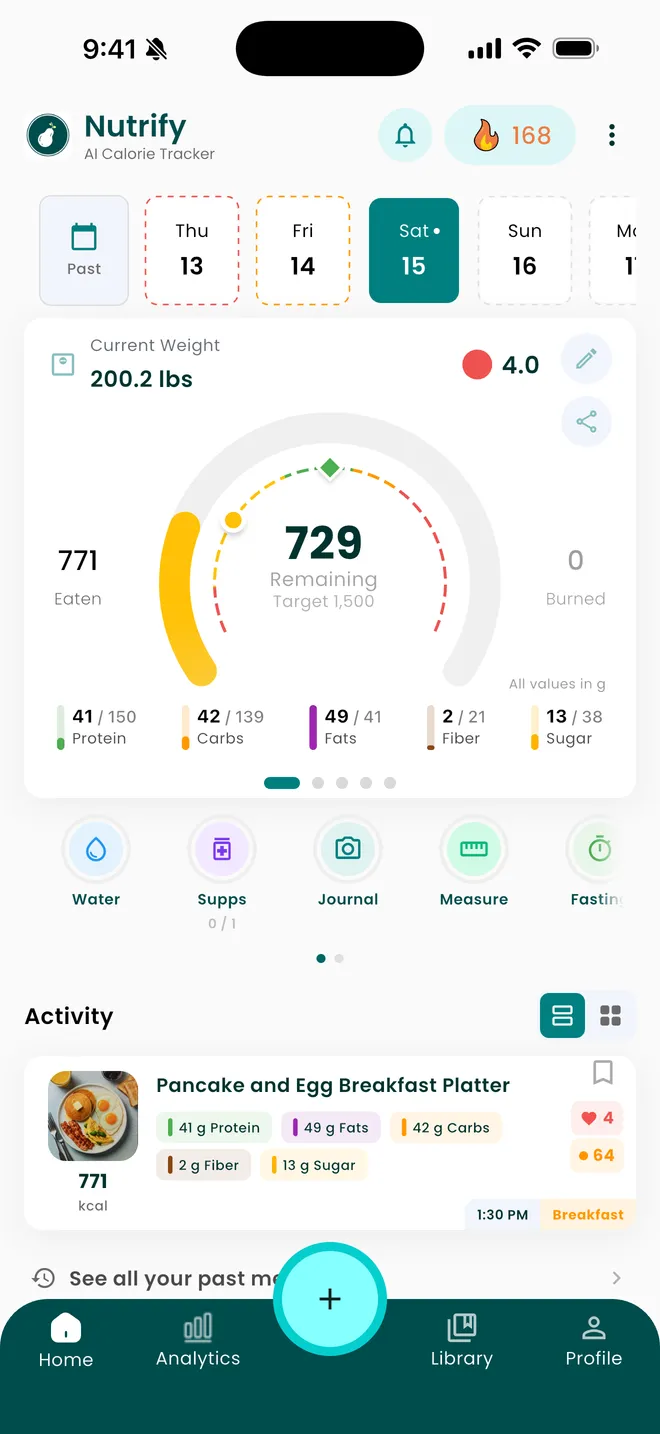
Trasforma le Tue Abitudini con Nutrify
La tua soluzione completa basata sull'IA per monitorare calorie, pasti e ricette. Un te più sano e felice.
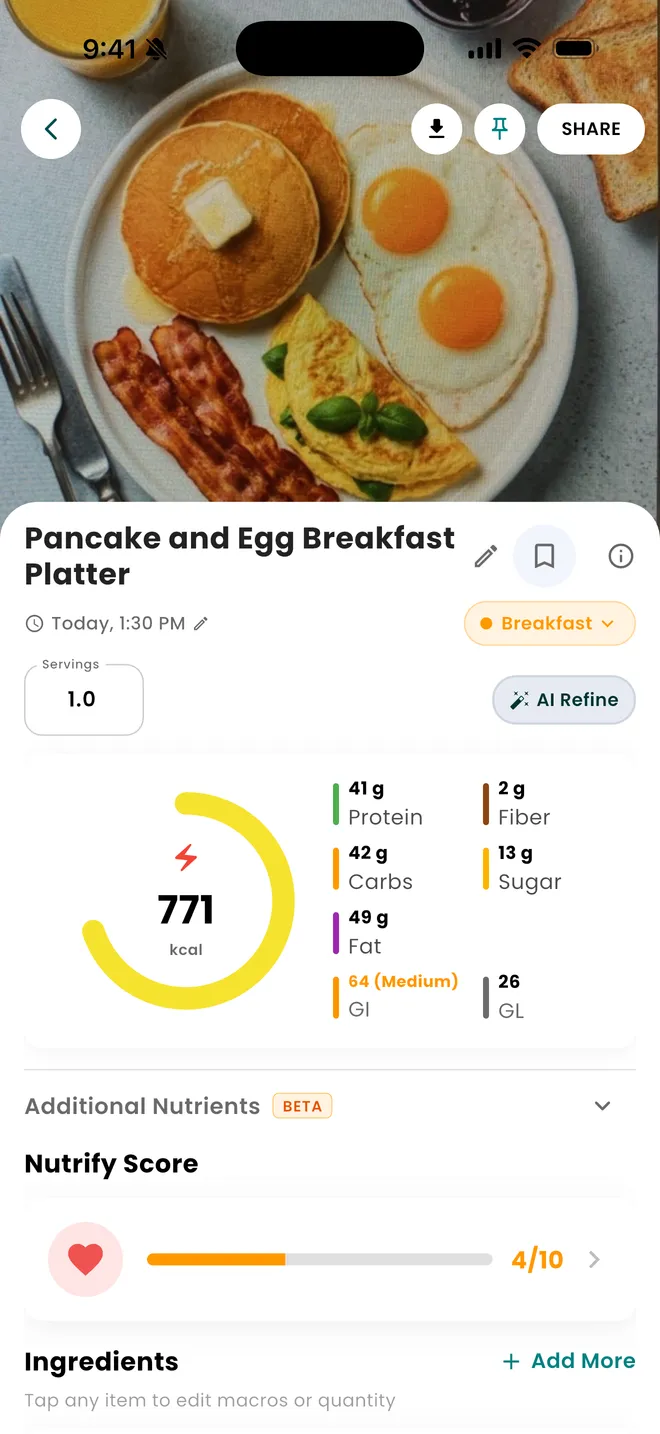
- •Monitoraggio calorie senza sforzo con riconoscimento alimentare IA
- •Piani pasto e ricette personalizzati
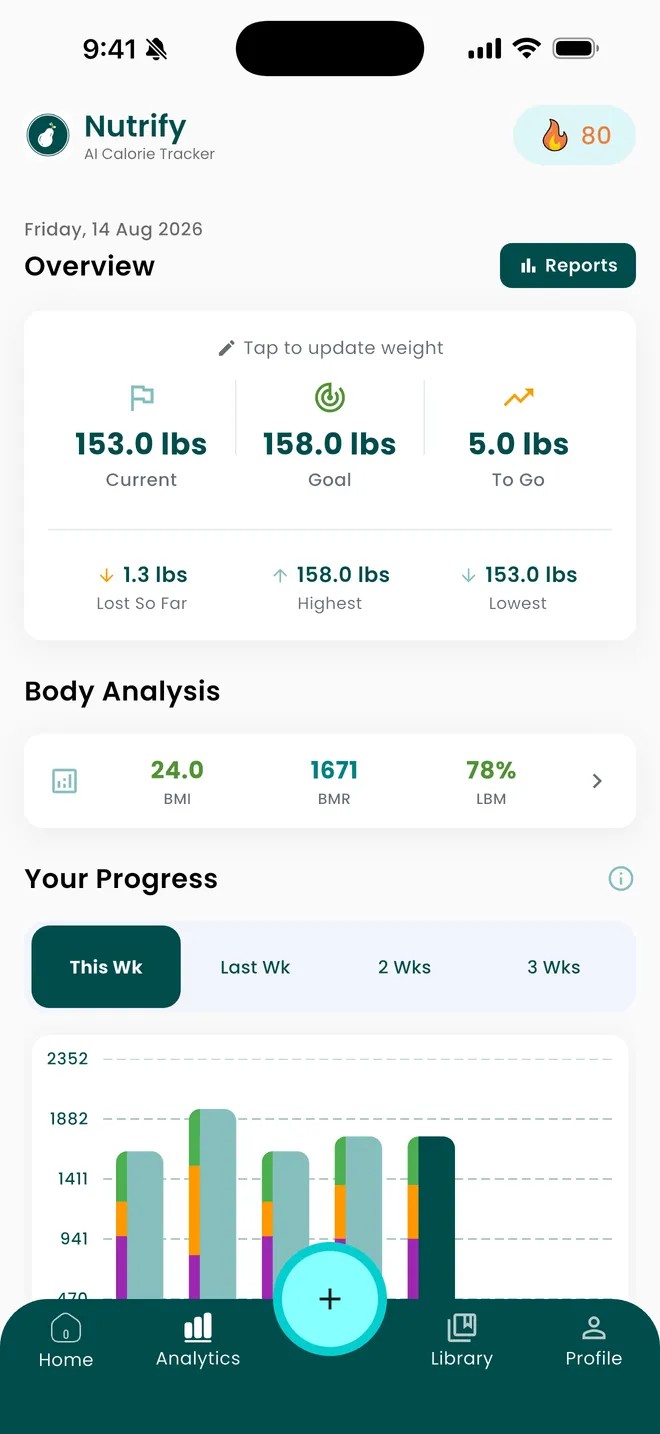
- •Monitoraggio progressi e approfondimenti


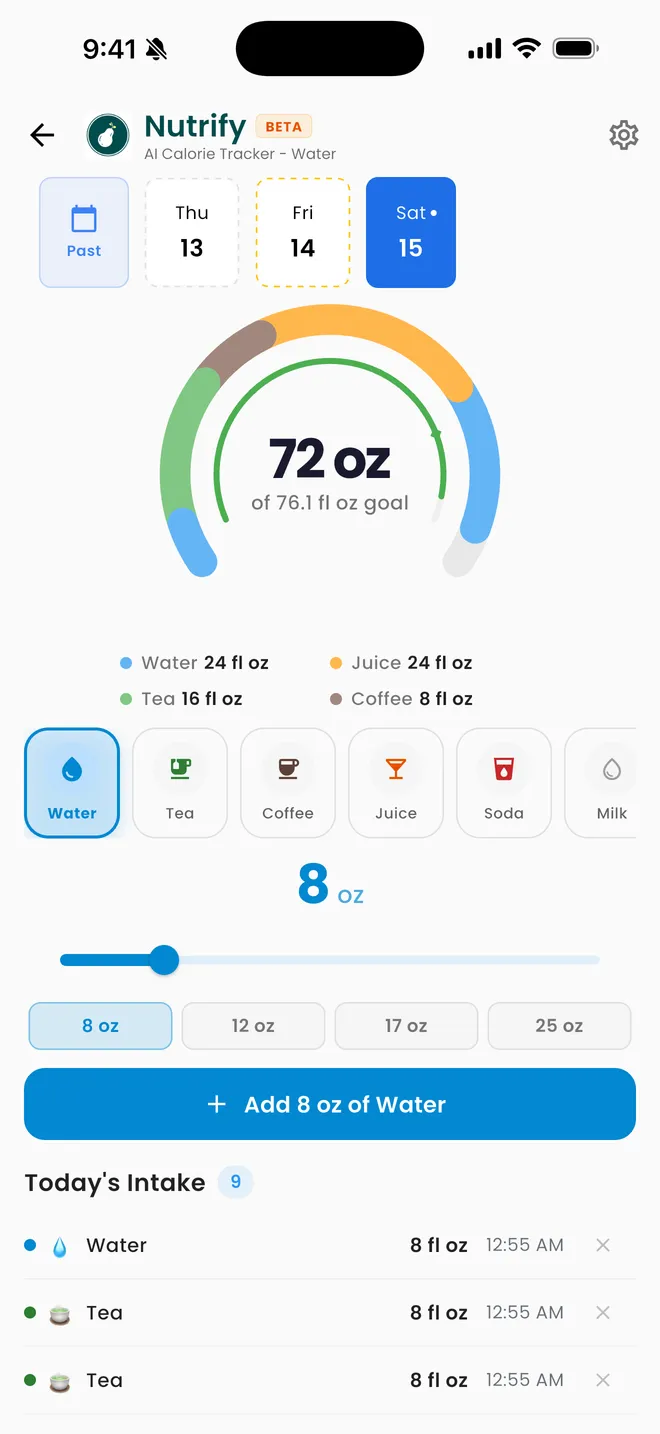
More than a calorie counter
Food, supplements, fasting, and progress in one app


Learn More About BMI
BMI Calculator: Everything You Need to Know About Body Mass Index
Ever stepped on a scale and wondered, "Is this weight healthy for my height?" That's exactly what BMI (Body Mass Index) helps answer.
BMI is a quick screening tool that estimates whether your weight falls into a healthy range based on your height. It's used by doctors, insurance companies, and health organizations worldwide. But here's the thing: BMI isn't perfect.
Think of BMI as a useful starting point - like checking the weather forecast before heading out. It gives you a general idea, but you wouldn't cancel your entire day just because there's a 20% chance of rain, right? Same with BMI. It's valuable information, but it's not the whole story about your health.
What is BMI?
Body Mass Index (BMI) is a number calculated from your weight and height. It's expressed as weight in kilograms divided by height in meters squared (kg/m²).
The formula was developed in the 1830s by Belgian mathematician Adolphe Quetelet (hence its original name "Quetelet Index"). It wasn't meant for individual health assessment initially - it was designed to study population-level obesity trends. Fast forward to the 1970s-1980s, and BMI became the go-to screening tool for individual health.
Here's why BMI became so popular: it's simple, fast, and free. You don't need expensive equipment or lab tests. Just two numbers - height and weight - and boom, you have an estimate of whether someone might be underweight, normal weight, overweight, or obese.
BMI Categories Explained
BMI categories help classify weight status. Here's the standard adult classification from the World Health Organization (WHO):
| BMI Range | Category | Health Risk | What This Means |
|---|---|---|---|
| Below 18.5 | Underweight | Increased risk | Malnutrition, weakened immune system, osteoporosis risk |
| 18.5 - 24.9 | Normal Weight | Lowest risk | Healthy weight range for most adults |
| 25.0 - 29.9 | Overweight | Moderate risk | Increased risk for heart disease, type 2 diabetes |
| 30.0 - 34.9 | Obesity Class 1 | High risk | Significantly higher risk for chronic diseases |
| 35.0 - 39.9 | Obesity Class 2 | Very high risk | Major health complications likely, medical intervention advised |
| 40.0+ | Obesity Class 3 (Severe) | Extremely high risk | Life-threatening complications, surgery may be recommended |
Important note: These ranges are for adults aged 20+. Children and teens use BMI-for-age percentiles instead of fixed categories.
How to Calculate BMI
BMI is calculated using a simple formula. You can use either metric or imperial units:
Metric Formula
BMI = weight (kg) ÷ height² (m²)
Example: 70 kg ÷ (1.75 m)² = 70 ÷ 3.0625 = 22.9 BMI (Normal weight)
Imperial Formula
BMI = (weight (lbs) × 703) ÷ height² (inches²)
Example: (154 lbs × 703) ÷ (69 inches)² = 108,262 ÷ 4,761 = 22.7 BMI (Normal weight)
Skip the math and use our BMI Calculator for instant results!
The HUGE Problem with BMI (That Nobody Talks About)
Here's the uncomfortable truth: BMI doesn't measure body fat. It measures weight relative to height. That's it.
This creates some major issues:
❌ Issue #1: Muscle vs Fat
BMI can't tell the difference between muscle and fat. A bodybuilder with 8% body fat and tons of muscle might have a BMI of 28 (classified as "overweight") even though they're incredibly fit. Meanwhile, someone with 35% body fat and no muscle might have a BMI of 24 ("normal") but actually be at risk for metabolic disease.
❌ Issue #2: Fat Distribution
BMI doesn't account for WHERE you store fat. Belly fat (visceral fat around organs) is way more dangerous than hip/thigh fat (subcutaneous fat). Two people with the same BMI can have completely different health risks based on fat distribution.
❌ Issue #3: Age and Gender
BMI doesn't adjust for age or gender. Women naturally have 6-11% more body fat than men at the same BMI. Elderly people lose muscle mass (sarcopenia), so "normal" BMI might mask unhealthy fat levels. The formula treats a 25-year-old athlete and a 70-year-old retiree the same!
❌ Issue #4: Ethnicity Differences
Asian populations tend to have higher body fat percentages at lower BMI levels. The WHO recommends lower thresholds for Asians: overweight at 23+ (instead of 25+) and obese at 27.5+ (instead of 30+). Pacific Islanders and Polynesians tend to have more muscle mass and may be healthy at higher BMIs.
The takeaway? Use BMI as a screening tool, not a diagnosis. If your BMI is borderline or concerning, get additional measurements like body fat percentage, waist circumference, or waist-to-hip ratio for the full picture.
BMI by Height: What You Should Weigh
Here's a quick reference table showing healthy weight ranges (BMI 18.5-24.9) for different heights:
| Height | Healthy Weight Range | Overweight Starts | Obese Starts |
|---|---|---|---|
| 5'0" (152 cm) | 95-127 lbs (43-58 kg) | 128 lbs (58 kg) | 153 lbs (69 kg) |
| 5'4" (163 cm) | 108-145 lbs (49-66 kg) | 146 lbs (66 kg) | 174 lbs (79 kg) |
| 5'8" (173 cm) | 122-164 lbs (55-74 kg) | 165 lbs (75 kg) | 197 lbs (89 kg) |
| 6'0" (183 cm) | 140-188 lbs (64-85 kg) | 189 lbs (86 kg) | 226 lbs (103 kg) |
| 6'4" (193 cm) | 158-213 lbs (72-97 kg) | 214 lbs (97 kg) | 256 lbs (116 kg) |
Remember: These are ranges, not targets! Your ideal weight depends on muscle mass, frame size, and body composition. Someone muscular might weigh at the upper end and be very healthy.
Better Alternatives to BMI
While BMI is useful, these measurements give a more complete picture of health:
1. Body Fat Percentage
What it is: The percentage of your total weight that's fat vs lean mass (muscle, bone, organs).
Why it's better: Actually measures what BMI tries to estimate - how much fat you have. You can have a "normal" BMI but high body fat (skinny fat) or "overweight" BMI but low body fat (athletic).
How to measure: DEXA scan (most accurate), bioelectrical impedance scales, skinfold calipers, or our Body Fat Calculator.
2. Waist-to-Hip Ratio (WHR)
What it is: Your waist circumference divided by hip circumference.
Why it's better: Shows fat distribution. High WHR means more belly fat (apple shape), which carries higher health risks than hip/thigh fat (pear shape). Women with WHR above 0.85 and men above 0.90 have increased risk.
How to measure: Use our WHR Calculator.
3. Waist Circumference
What it is: Measurement around your waist at belly button level.
Why it's better: Direct indicator of visceral (belly) fat, which is most dangerous. Women with waist over 35" and men over 40" have significantly increased health risks, regardless of BMI.
How to measure: Use a tape measure around your natural waist, breathing normally.
How to Lower Your BMI (The Right Way)
If you need to reduce your BMI, focus on sustainable changes that improve overall health, not just the number on the scale:
Step 1: Calculate Your Calorie Target
To lose 1 lb per week, you need a 500-calorie daily deficit. First, find your TDEE (Total Daily Energy Expenditure) with our TDEE Calculator, then subtract 300-500 calories.
Use our Calorie Deficit Calculator to find your exact target for weight loss.
Step 2: Prioritize Protein
High protein intake (0.8-1.2g per pound of body weight) preserves muscle mass during weight loss. Losing muscle tanks your metabolism and makes it harder to keep weight off long-term.
Calculate your daily protein needs with our Protein Calculator.
Step 3: Strength Train 3-4x Per Week
Building muscle while losing fat improves body composition dramatically. You might lose less weight on the scale, but you'll look and feel way better because you're losing fat and gaining/preserving muscle. Plus, muscle burns more calories at rest than fat does!
Step 4: Track Progress Beyond BMI
Don't obsess over BMI alone. Track body measurements (waist, hips), progress photos, how clothes fit, strength gains in the gym, and energy levels. These paint a fuller picture of your health improvements.
When to See a Doctor
While this calculator provides useful estimates, consult a healthcare provider if:
- Your BMI falls in the underweight (<18.5) or obese (>30) category
- You have risk factors for heart disease, diabetes, or other weight-related conditions
- You are concerned about a child or teenager's weight status
FAQ
Domande Frequenti
Trova le risposte alle domande più comuni
A healthy BMI for most adults falls between 18.5 and 24.9. However, this range can vary slightly based on factors like age, muscle mass, and ethnicity. Asian populations, for example, may have increased health risks at lower BMI levels (23+). Athletes with high muscle mass may have a BMI over 25 but still be very healthy.
Yes, BMI can be "wrong" in certain cases because it doesn't measure body fat directly. Muscular individuals (bodybuilders, athletes) often have high BMIs despite low body fat. Elderly people may have "normal" BMI but high body fat due to muscle loss. BMI also doesn't account for where you store fat - belly fat is riskier than hip/thigh fat.
If you have a high BMI but look thin, you likely have low muscle mass and higher body fat percentage (sometimes called "skinny fat" or normal weight obesity). This can happen from lack of exercise, crash dieting, or aging. Your BMI is elevated by body fat, but you don't "look overweight" because you lack muscle definition. Check your body fat percentage for a clearer picture.
The BMI formula is the same for men and women, but interpretation can differ. Women naturally have 6-11% more body fat than men at the same BMI due to biological differences. A man with BMI 25 might have 20% body fat (borderline), while a woman with BMI 25 might have 30% body fat (acceptable). This is why some experts argue for gender-specific BMI ranges.
BMI of 30 or higher is classified as obese. This is further divided into: Class 1 Obesity (BMI 30-34.9), Class 2 Obesity (BMI 35-39.9), and Class 3 Obesity or Severe Obesity (BMI 40+). At BMI 40+, health risks increase dramatically - risk of type 2 diabetes is 7x higher, heart disease risk triples, and life expectancy can decrease by 8-10 years.
Yes, but differently! Children's BMI is calculated the same way, but the results are plotted on growth charts and compared to other children of the same age and gender (called BMI-for-age percentiles). For example, a 10-year-old boy at the 85th percentile means his BMI is higher than 85% of boys his age. Percentiles above 95th are considered obese for children.
Several measurements are more accurate than BMI: 1) Body Fat Percentage (measures actual fat vs muscle), 2) Waist-to-Hip Ratio (WHR) assesses fat distribution and health risks, 3) Waist Circumference (belly fat indicator), 4) DEXA scans (gold standard for body composition). Use BMI as a starting point, then add these measurements for a complete picture.
Healthy BMI change is gradual. Losing 1-2 lbs per week is sustainable, which changes BMI by about 0.3-0.6 points monthly. To drop from BMI 30 to 25 (obese to normal), a 5'10" person needs to lose ~35 lbs, taking 4-8 months safely. Rapid BMI changes (crash dieting) often lead to muscle loss and regain. Slow and steady wins the race!
Yes, absolutely! Most life insurance companies use BMI as a key underwriting factor. BMI over 30 typically means higher premiums or even denial of coverage. BMI 25-29.9 might qualify for "standard" rates, while BMI 18.5-24.9 often gets "preferred" rates (lowest premiums). Some insurers are moving to more nuanced assessments, but BMI remains a major factor.
BMI is a decent starting metric for weight loss, but not the only one! Track BMI alongside body measurements (waist, hips), body fat percentage, how clothes fit, energy levels, and strength gains. Many people reach a healthy BMI but still want to improve body composition (less fat, more muscle). Focus on overall health markers, not just hitting a specific BMI number.
Related Calculators
- Body Fat Calculator - Estimate your body fat percentage using measurements
- Ideal Weight Calculator - Find your ideal weight using multiple formulas
- Waist-to-Hip Ratio Calculator - Assess fat distribution and health risks
- TDEE Calculator - Calculate your daily calorie needs
- Calorie Deficit Calculator - Find your calorie target for weight loss
Trasforma le Tue Abitudini con Nutrify
La tua soluzione completa basata sull'IA per monitorare calorie, pasti e ricette. Un te più sano e felice.
- •Monitoraggio calorie senza sforzo con riconoscimento alimentare IA
- •Piani pasto e ricette personalizzati
- •Monitoraggio progressi e approfondimenti
More than a calorie counter
Food, supplements, fasting, and progress in one app
Segui Nutrify su Google
Aggiungi Nutrify tra le fonti preferite per vedere più guide sulla nutrizione nei tuoi risultati Google.